कलम के ‘सिकंदर’ - पंडित सुदर्शन
....................शिशिर कृष्ण शर्मा

‘हार की जीत’!...बाबा भारती और उनके चहेते घोड़े सुल्तान पर लालची नज़रें गड़ाए बैठे डाकू खड़गसिंह के किरदारों के गिर्द घूमती कहानी ‘हार की जीत’ का हिंदी साहित्य में वोही स्थान है जो मुंशी प्रेमचंद की ‘ईदगाह’ और चन्द्रधर शर्मा ‘गुलेरी’ की ‘उसने कहा था’ जैसी कालजयी रचनाओं का है। लेकिन अफ़सोस, कि मुंशी प्रेमचंद, चन्द्रधर शर्मा ‘गुलेरी’ और उन जैसे कई अन्य कहानीकारों के विपरीत ‘हार की जीत’ के रचनाकार पंडित सुदर्शन के बारे में आम पाठकों को ज़्यादा जानकारी नहीं है। दरअसल मुंशी प्रेमचंद की ही तरह पंडित सुदर्शन भी उर्दू से हिंदी लेखन की तरफ़ आए थे। इन दोनों साहित्यकारों में एक समानता ये भी थी कि दोनों ने ही सिनेमा के क्षेत्र में क़िस्मत आज़माने की कोशिश की थी। फर्क सिर्फ़ इतना है कि मुंशी प्रेमचंद को फ़िल्मी दुनिया रास नहीं आयी और 1934 में बनी फ़िल्म ‘मिल मज़दूर’ लिखने के बाद वो वापस लौट गए तो वहीं दूसरी तरफ़ पंडित सुदर्शन हिंदी सिनेमा में धाक जमाने में पूरी तरह से कामयाब रहे। हिंदी सिनेमा के इतिहास में गहरी दिलचस्पी रखने वालों को भी शायद पता न हो कि जिस गीत से फ़िल्मों में प्लेबैक की शुरूआत हुई थी वो पंडित सुदर्शन की ही कलम से निकला था। क़रीब दो दशकों के करियर के दौरान पंडित सुदर्शन ने एक से बढ़कर एक फ़िल्में और गीत लिखे और फिर चमक-दमक भरी फ़िल्मी दुनिया को अलविदा कहकर ख़ुद को पूरी तरह से साहित्य के प्रति समर्पित कर दिया था।

साल 1896 में स्यालकोट (अब पाकिस्तान) के एक सम्पन्न परिवार में जन्मे पंडित सुदर्शन का असली नाम बद्रीनाथ शर्मा था। एक बेटी और चार बेटों के बीच माता-पिता की दूसरी संतान बद्रीनाथ महज़ 10-12 साल के थे जब उनके माता-पिता गुज़र गए थे। तमाम मुश्किलों के बीच उन्होंने स्यालकोट से बी.ए. किया और फिर काम की तलाश में लाहौर चले आए। लिखने का शौक़ बचपन से ही था इसलिए लाहौर से निकलने वाली उर्दू पत्रिका ‘हज़ार दास्तां’ में लिखने लगे।
20-21 साल की उम्र में उनकी शादी हुई, पत्नी बटाला-गुरदासपुर से थीं और मैट्रिक पास थीं जो कि उस जमाने में लड़कियों के लिए बहुत बड़ी बात थी। शादी के बाद ज़िम्मेदारियां बढ़ीं तो उर्दू में अपना ख़ुद का अख़बार निकालना शुरू किया जिसने जल्द ही बाज़ार के एक बहुत बड़े हिस्से पर कब्ज़ा जमा लिया। ऐसे में ईर्ष्या-द्वेष और साज़िशों का दौर शुरू हो गया। पैसे के ज़ोर पर अख़बार को पाठकों तक पहुंचने से रोका जाने लगा। नतीजतन कुछ ही सालों में हालात बिगड़ने शुरू हुए तो फिर सम्भल ही नहीं पाए। मजबूरन पंडित सुदर्शन को लाहौर छोड़ देना पड़ा। उधर साल 1920 में इलाहाबाद से छपने वाली पत्रिका ‘सरस्वती’ में उनकी लिखी पहली हिंदी कहानी ‘हार की जीत’ प्रकाशित हुई थी जिसे पाठकों ने बेहद पसंद किया था।

पंडित सुदर्शन की बेटी श्रीमती प्रभा रामदेव कनागत ने हाल ही में हुई मुलाक़ात के दौरान बताया कि साल 1932 में पंडित सुदर्शन परिवार के साथ कोलकाता चले आए। कोलकाता में उन दिनों ‘न्यू थिएटर्स’, ‘माडन थिएटर्स’, ‘ईस्ट इंडिया फ़िल्म कंपनी’, ‘पायोनियर फ़िल्म्स’, ‘बरुआ पिक्चर्स’, ‘राधा फ़िल्म कंपनी’ ‘दुर्गा इंटरनेशनल फ़िल्म्स’, ‘बी.आई.क्वालिटी फ़िल्म्स’, ‘काली फ़िल्म्स’ और ‘भारत लक्ष्मी पिक्चर्स’ जैसी कई छोटी-बड़ी कंपनियां लगातार हिंदी फ़िल्में बनाने में जुटी हुई थीं। टॉकी फिल्मों का वो शुरूआती दौर था और अच्छा लिखने वालों की ज़बर्दस्त मांग थी। ऐसे में पंडित सुदर्शन को काम मिलते देर नहीं लगी। उनके करियर की पहली फ़िल्म ‘रामायण’ थी जो साल 1934 में प्रदर्शित हुई थी। ‘भारत लक्ष्मी पिक्चर्स’ की इस पौराणिक फ़िल्म के संगीतकार थे मास्टर नागरदास नायक और कलाकार थे पृथ्वीराज कपूर, विट्ठलदास पंचोटिया, दादाभाई सरकारी, देवबाला, इंदुबाला, राजकुमारी नायक और शहज़ादी। पंडित सुदर्शन ने कथा-पटकथा और संवाद लिखने के अलावा प्रफुल्ल रॉय के साथ मिलकर इस फ़िल्म का निर्देशन भी किया था। साल 1935 में ‘भारत लक्ष्मी पिक्चर्स’ के बैनर में ही पंडित सुदर्शन की लिखी अगली फ़िल्म ‘कुवांरी या विधवा’ प्रदर्शित हुई जिसका निर्देशन एक बार फिर से पंडित सुदर्शन और प्रफुल्ल रॉय की जोड़ी ने किया। इसके संगीतकार भी मास्टर नागरदास नायक और कलाकार अब्दुल्ला काबुली, ज़रीना ख़ातून, शहजादी, मास्टर फ़िदा हुसैन, इंदुबाला, कमला, आर.पी.कपूर और दुर्लभराम थे। इसके बाद पंडित सुदर्शन ‘भारत लक्ष्मी पिक्चर्स’ छोड़कर ‘न्यू थिएटर्स’ में चले गए।

‘न्यू थिएटर्स’ उस दौर की जानी-मानी कंपनी थी जो साहित्यिक कृतियों पर बनी संगीतमय और उत्कृष्ट सामाजिक फ़िल्मों के लिए जानी जाती थी। पंकज मल्लिक, रायचंद बोराल, कुंदनलाल सहगल, मिज्जन कुमार, देवकी बोस, के.सी.डे, रतनबाई, पहाड़ी सान्याल, प्रेमांकुर अटार्थी, उमा शशि, नितिन बोस, प्रथमेश बरुआ और केदार शर्मा जैसे दिग्गज इसी कंपनी में रहकर काम कर रहे थे। उस वक़्त तक प्लेबैक की शुरूआत नहीं हुई थी और कलाकारों को कैमरे के सामने ख़ुद ही गाना पड़ता था। भारत में प्लेबैक का पहली बार इस्तेमाल साल 1935 में बनी ‘न्यू थिएटर्स’ की फ़िल्म ‘धूपछांव’ में हुआ था। रायचंद बोराल द्वारा संगीतबद्ध वो एक समूहगीत था, ‘मैं ख़ुश होना चाहूं ख़ुश हो न सकूं’ जिसे पारूल घोष, सुप्रोवा सरकार, हरिमति और साथियों ने गाया था। फ़िल्म ‘धूपछांव’ के ‘रायचंद बोराल’ और ‘पंकज मल्लिक’ द्वारा संगीतबद्ध किए सभी 10 गीत पंडित सुदर्शन ने लिखे थे जिनमें के.सी.डे के गाए दो गीत ‘बाबा मन की आंखें खोल’ और ‘तेरी गठरी में लागा चोर मुसाफ़िर’ आज भी उतने ही लोकप्रिय हैं।
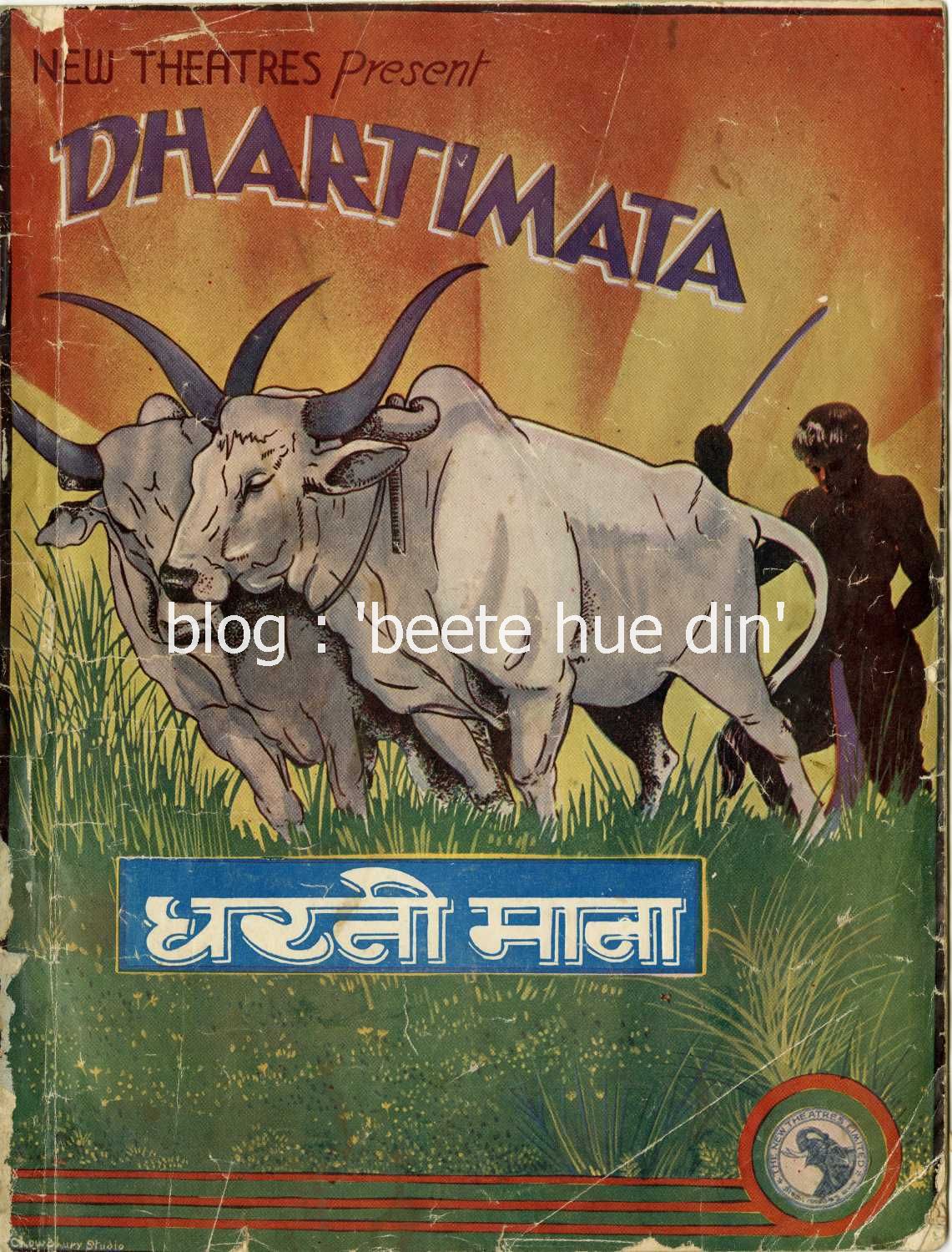
पंडित सुदर्शन की अगली फ़िल्म ‘धरतीमाता’ का निर्माण भी ‘न्यू थिएटर्स’ के बैनर में हुआ था। साल 1938 में प्रदर्शित हुई ये फ़िल्म अपने वक़्त की बहुत बड़ी हिट साबित हुई। इस फ़िल्म के सभी 9 गीत पंडित सुदर्शन ने ही लिखे थे। पंकज मल्लिक द्वारा संगीतबद्ध किए और सहगल, उमाशशि और पंकज मल्लिक के गाए इन गीतों में ‘दुनिया रंगरंगीली बाबा’, ‘मैं मन की बात बताऊं’, ‘किसने ये सब खेल रचाया’ और ‘अब मैं का करूं कित जाऊं’ जैसे मशहूर गीत शामिल हैं। लेकिन ‘धरतीमाता’ जैसी हिट फ़िल्म देने के बावजूद पंडित सुदर्शन को कोलकाता छोड़ना पड़ा।
श्रीमती प्रभा रामदेव कनागत के मुताबिक़ पंडित सुदर्शन की सफलता कुछ लोगों को रास नहीं आयी और उनके ख़िलाफ़ साज़िशें रची जाने लगीं। मजबूरन उन्हें कोलकाता छोड़कर परिवार सहित मुंबई चले आना पड़ा, जहां उन्हें ‘सागर मूवीटोन’ की फ़िल्म ‘ग्रामोफ़ोन सिंगर’ की कथा-पटकथा लिखने का मौक़ा मिला। ये फ़िल्म साल 1938 में प्रदर्शित हुई थी। ‘सागर मूवीटोन’ की ही 1940 में बनी फ़िल्म ‘कुमकुम द डांसर’ में उन्होंने सभी 6 गीत लिखे जिन्हें संगीतकार तिमिर बरन ने संगीतबद्ध किया था। 1940 में ही पंडित सुदर्शन को ‘रणजीत मूवीटोन’ की फ़िल्म ‘दीवाली’ में संगीतकार ‘खेमचंद प्रकाश’ के साथ काम करने का मौक़ा मिला, हालांकि उस फ़िल्म के कुछ गीत दीनानाथ मधोक और प्यारेलाल संतोषी ने भी लिखे थे।


इनमें से ‘पृथ्वीवल्लभ’ और ‘पत्थरों का सौदागर’ उनकी अपनी कहानियों पर बनी थीं। इसके अलावा उन्होंने ‘सेंट्रल स्टूडियोज’ की ‘परख’ (1944), ‘प्रफुल्ल पिक्चर्स’ की ‘सुभद्रा’ (1946), ‘कुलदीप पिक्चर्स लिमिटेड’ की ‘जलतरंग’ (1949) में भी गीत लिखे और फिर वो निर्माता एम.सोमसुंदरम के बुलावे पर मद्रास चले गए। क़रीब 2
साल मद्रास में रहकर उन्होंने एम.सोमसुंदरम की कंपनी ‘जुपिटर पिक्चर्स’ की दो फ़िल्मों ‘एक था राजा’ (1951) और ‘रानी’ (1952) में अपनी कलम का जादू बिखेरा और फिर फ़िल्मों से हमेशा के लिए किनारा करके वापस मुंबई लौट आए। इस तरह से ‘रानी’ उनके करियर की आख़िरी फ़िल्म साबित हुई।
श्रीमती प्रभा रामदेव कनागत बताती हैं कि मुंबई लौटने के बाद पंडित सुदर्शन पूरी तरह से साहित्य साधना में जुट गए। उन्होंने कई नाटक लिखे और ‘हार की जीत’ के अलावा उनकी लिखी ‘सच का सौदा’, ‘अठन्नी का चोर’, ‘साईकिल की सवारी’, ‘तीर्थयात्रा’, ‘पृथ्वीवल्लभ’ और ‘पत्थरों का सौदागर’ जैसी कहानियां भी काफ़ी सराही गयीं। और जैसा कि एक बार महात्मा गांधी ने उन्हें ख़ासतौर से वर्धा बुलाकर कहा था कि आप हिंदी के प्रचार के लिए क़िताबें लिखिए तो समय मिलते ही उन्होंने महात्मा गांधी की आज्ञा का पालन भी किया। इस दिशा में पंडित सुदर्शन की लिखी क़िताब ‘सबकी बोली’ कई सालों तक चौथी कक्षा तक सभी स्कूलों में पढ़ाई जाती रही। कलम के धनी पंडित सुदर्शन का निधन 16 दिसम्बर 1967 को 72 साल की उम्र में मुंबई में हुआ।

4 बेटों और 1
बेटी के पिता पंडित सुदर्शन के बड़े बेटे विद्याभूषण शर्मा सोहराब मोदी के साथ बतौर सह-निर्देशक काम करते रहे तो छोटे बेटे शशिभूषण ने ‘प्रोफ़ेसर’, ‘मोहब्बत ज़िंदगी है’, ‘अनामिका’, ‘पॉकेटमार’, ‘जलमहल’, ‘लावारिस’ और ‘प्रेमगीत’ जैसी फ़िल्मों के लेखक के तौर पर नाम कमाया। उनके चारों बेटे अब इस दुनिया में नहीं हैं। सिर्फ़ एक बेटी हैं जो 87
साल की हो चुकी हैं और मुंबई के जुहू-वर्सोवा लिंक रोड पर अपने बेटे अशोक कनागत के साथ रहती हैं। अशोक विज्ञापन फिल्मों के निर्माता हैं।

पंडित सुदर्शन का देहांत हुए भले ही 45
साल गुजर चुके हों और भले ही उनका नाम आज की पीढ़ी के लिए अनजाना सा हो लेकिन उनकी लेखनी ऐसी चमत्कृत कर देने वाली थी कि सिनेमा और साहित्य की दुनिया में उनका नाम हमेशा अमर रहेगा।
We are thankful to –
Mr. Harish Raghuvanshi & Mr. Harmandir Singh ‘Hamraz’ for their valuable suggestion, guidance and support.
Mr. S.M.M.Ausaja for providing movies’ posters.
Ms. Aksher Apoorva for the English translation of the write ups.
Mr. Manaswi Sharma for the technical support including video editing.
Pt. Sudarshan on YT Channel BHD
Kalam ke ‘Sikandar’ - Pandit Sudarshan
...........................Shishir Krishna Sharma
‘Haar Ki Jeet’!... a novella which revolves around characters
like Baba Bharti and his beloved horse Sultaan and the Daku Khadag Singh whose
greedy eyes are glued onto sultan, this novella ‘Haar Ki Jeet’
has the same place in Hindi literature as that classical compositions as of the
likes of Munshi Premchand’s ‘Idgah’ or Chandradhar Sharma ‘Guleri’s ‘Usne Kaha Tha’. But unfortunately,
unlike well-known writers like Munshi Premchand, Chandradhar
Sharma ‘Guleri’ and many others; the common man does not know
much about Pandit Sudarshan or his creations like those of ‘Haar
Ki Jeet’. While the fact is that just like Munshi Premchand, Pandit Sudarshan had also changed courses from Urdu writing to
Hindi writing. In fact another similarity between the two literary giants was
that at one point in their careers they both had tried their hands at cinematic
writing. The only difference being that while Munshi Premchand gave up on the charm
and fascination of the cinematic world after his 1934 movie ‘Mill Mazdoor’, Pandit
Sudarshan successfully and completely reigned over the magic that is movie
making. Many a time fanatic historians of Hindi cinema are also baffled to
learn that the song that marked the beginning of playback in Indian cinemas was
penned by none other than Pandit Sudarshan himself. In a career spanning almost
two decades, Pandit Sudarshan delivered numerous hit films and songs one after
the other and then ultimately bid goodbye to the glitz and glamour of Bollywood
to once again completely immersed himself into the literature world of writing.
Born of a rich family on 1896 in Sialkot (now Pakistan) Pandit Sudarshan’s real name was Badrinath Sharma. The second child among one sister and four brothers, Badrinath was only 10-12 years old when both his parents passed away. In spite of all the struggles he faced, he managed to complete his B.A. from Sialkot and went on to Lahore in search of work. Fond of writing since a very young age, he started writing for an Urdu magazine ‘Hazaar Dastaan’ in Lahore. At the tender age of 20-21 he married from Batala-Gurdaspur who was a matric pass out, a very big achievement for girls in those days. In view of his increasing marital responsibilities, Pandit Sudarshan started his own Urdu newspaper which captured a big portion of the market quickly. Resulting in growing envy and jealousy among his peers who used money as a pawn to hinder the newspaper supply before it could even reach its eager readers. Consequentially the situation deteriorated to such an extent that it could not be controlled again and Pandit Sudarshan was forced to leave Lahore behind. At the same time in 1920 his first Hindi story ‘Haar Ki Jeet’ which had appeared in ‘Saraswati’, a magazine published from Allahabad, gained much fame and was much appreciated by its readers.
In a recent
meeting with Pandit Sudarshans daughter Smt. Prabha Ramdev Kanagat it was revealed that in 1932 Pandit
Sudarshan and his family migrated to Kolkata. During those days in Kolkata there
many upcoming companies like ‘New Theatres’, ‘Madan Theatres’, ‘East India Film Co.’, ‘Pioneera Films’, ‘Barua Pictures’, ‘Radha Film Co.’, ‘Durga International Films’, ‘B.I.Quality Films’, ‘Kali Films’ and ‘Bharat Laxmi Pictures’ which were continuously
involved in making Hindi films. The era of Talkie films had just started and good writers
were in big demand. And in no time Pandit Sudarshan was showered with work. ‘Ramayan’
was the debut film of his career which was screened in the year 1934. Produced
under the banner of ‘Bharat Laxmi Pictures’ Master Nagardass Nayak was the music
composer of this mythological film and the cast comprised of Prithviraj Kapoor,
Vitthaldass Panchotia, Dadabhai Sarkari, Devbala, Indubala, Rajkumari Nayak and
Shehzadi. Apart from writing the story, screenplay and dialogues Pandit
Sudarshan also directed the film along with Prafull Roy. In 1935 Pandit Sudarshan
scripted his next ‘Kunwai Ya Vidhwa’ which was screened under the banner of
‘Bharat Laxmi Pictures’ where Prafull Roy and Pandit Sudarshan once again
teamed up for this directorial venture. Master Nagardass Nayak gave music for
this film and the cast comprised of Abdulla Kabuli, Zarina Khatoon, Shehzadi,
Master Fida Hussain, Indubala, Kamla, R.P.kapoor and Durlabhram. After this
Pandit Sudarshan and ‘Bharat
Laxmi Pictures’ parted ways and he joined ‘New Theatres’.
‘New Theatres’
was a well-known company in that period which was famous for making musical
social dramas based on literary works. Famed personalities like Pankaj Mallik, Raichand Boral, Kundanlal Sehgal,
Mijjan Kumar, Devki Bose, K.C.Dey, Ratanbai, Pahadi Sanyal, Premankur Atorthy,
Umashashi, Nitin Bose, Prathamesh Barua and Kedar Sharma were its in house
artists. At this time playback recording hadn’t been introduced and all the
artists would sing live in front of the camera to record their songs. In 1935
‘New Theatres’ introduced the technique of playback recording in their film
‘Dhoop Chhaon’ making it the first film in India to use playback. This song
‘mai khush hona chahoon khush ho na sakoon’ was composed by Raichand Boral and
Parul Ghosh, Suprova Sarkar, Harimati and Chorus lend their voices for the
same. All the 10 songs of the film ‘Dhoop Chhaon’ were composed by Raichand
Boral and ‘Pankaj Mallik’ and all these songs were penned by
Pandit Sudarshan out of which two songs sung by K.C.Dey, ‘baba mann ki ankhein
khol’ and ‘teri gathri me laga chor musafir jaag zara’ are just as famous and
popular till date.
Pandit Sudarshan’s next ‘Dhrtimata’ was also produced under the banners
of ‘New Theatres’. Released in the year 1938 this film was a big hit of its time.
Pandit Sudarshan wrote all the nine songs of this film. Composed by Pankaj
Mallik and sung by Sehgal, Umashashi and Pankaj Mallik, the film boosted of a
impressive song collection including famous hits like ‘duniya rang-rangili
baba’, ‘mai mann ki baat bataoon’, ‘kisne ye sab khel rachaaya’ and ‘ab mai kya
karoon kit jaoon’. But despite giving hits like ‘Dhrtimata’, Pandit Sudarshan had to leave Kolkata.
According to Smt. Prabha Ramdev Kanagat, many
people could not digest Pandit Sudarshan’s success and many intrigues were made
against him. In the lurch he shifted his base from Kolkata to Mumbai along with
his family and joined ‘Sagar Movietone’ where he got a change to write the
story-screenplay of the film ‘Gramophone Singer’ which was screened in the year
1938. In 1940 he wrote six songs for Sagar Movietone’s ‘Kumkum The Dancer’ and
the music for these songs was composed by ‘Timir Baran’.
In 1940 Pandit
Sudarshan got the opportunity to work with music composer ‘Khemchand Prakash’
for Ranjit Movietone’s film ‘Diwali’, although some songs of the film were also
penned by Dinanath madhok and Pyarelal Santoshi. Pandit Sudarshan got recognition while his stay in
Kolkata, in Mumbai as well his social circle began to expand. Sohrab Modi, Producer-Director-Actor
and owner of ‘Minerva Movietone’ was well recognized name in those days. He was so taken in by Pandit Sudarshan’s body
of work that when he decided to make the big budget Historical film ‘Sikandar’,
he asked Pandit Sudarshan to write the story, screenplay, dialogues as well as
handed him the responsibility to oversee all the research for the film. Released
in 1941 the movie ‘Sikandar’ was a big hit and the music and the songs of the
film became very popular amongst the people. There total 7 songs in the film
composed by Mir Sahib and Rafiq Gaznavi. The main leads of the film were Sohrab
Modi, Prithviraj Kapoor, Vanmala, K.N.Singh
and Jillobai. This was actress Vanmala’s first Hindi debut who had already
started her career with a Marathi film ‘Lapandaav’ in 1940. In 1941 Pandit
Sudarshan wrote all the 11 songs for the film ‘Padosi’ which was directed by
V.Shantaram under the banners of ‘Prabhat Film Co. Pune’. The music was
composed by Master Krishna Rao. After the phenomenal success of ‘Sikandar’,
Pandit Sudarshan scripted 3 more films for ‘Minerva Movietone’ called ‘Phir
Milenge’ (1942), ‘Prithvi Vallabh’ (1943) and ‘Pattharon Ka Saudagar’ (1944). Out of these ‘Prithvi Vallabh’ and ‘Pattharon Ka Saudagar’ were based on
his own stories. He also wrote songs for Central Studios ’s ‘Parakh’ (1944), ‘Prafull Pictures’s ‘Subhadra’ (1946), ‘Kuldeep Pictures Ltd.’s ‘Jaltarang’ (1949) and on producer M.Somasundaram invitation
he went on to Madras. He spent the next 2 in Madras where he worked with
M.Somasundaram’s company ‘Jupitar Pictures’. He enthralled the audiences with ‘Ek
Tha Raja’ (1951) and ‘Rani’ (1952) after which he bid adieu to movies
and returned to Mumbai. And just like that ‘Rani’ became his cinematic careers
last film.
Smt. Prabha
Ramdev Kanagat says on Pandit
Sudarshan’s return to Mumbai he devoted himself completely to literature. He
put to paper many plays and his stories like ‘Sach Ka Sauda’, ‘Athanni Ka
Chor’, ‘Cycle Ki Sawari’, ‘Teerth Yatra’, ‘Prithvi Vallabh’ and ‘Pattharon Ka
Saudagar’ received much acclaim like his previously written ‘Haar Ki Jeet’. And
the story goes that once Mahatma Gandhi especially invited him to Vardha and
requested him to write books in Hindi to popularize the language and as soon as
Pandit Sudarshan got time he obeyed Mahatma Gandhi’s wishes and did the same.
And accordingly Pandit Sudarshan’s creation ‘Sabki Boli’ was included in the
school syllabus and was taught in 4th standard for many years. This
gifted author Pandit Sudarshan passed away at the age of 72 on 16th December 1967 in Mumbai.
Pandit Sudarshan is survived by 4 sons and a
daughter. His eldest Vidyabhushan Sharma was a Co-Director with Sohrab Modi and
his younger son Shashibhushan earned fame as a writer on movies like Professor,
Mohabbat Zindagi hai, Anamika, Pocketmaar, Jalmahal, Lawaris and Premgeet.
Unfortunately his sons are no more. The lineage is carried forward by his
daughter Prabha who is now 86 years old and stays at Mumbai’s Juhu-Versova Link
Road with her son Ashok Kanagat. Ashok is an Ad-film maker.
Pandit Sudarshan might have passed away 45 years ago and his name might not be familiar to the new generation but his writing was inspirational and awe stirring to the extent that his name will always be taken among with the legends of Hindi Cinema and Indian literature.
